Understanding the Roots and Mechanics of Jueteng
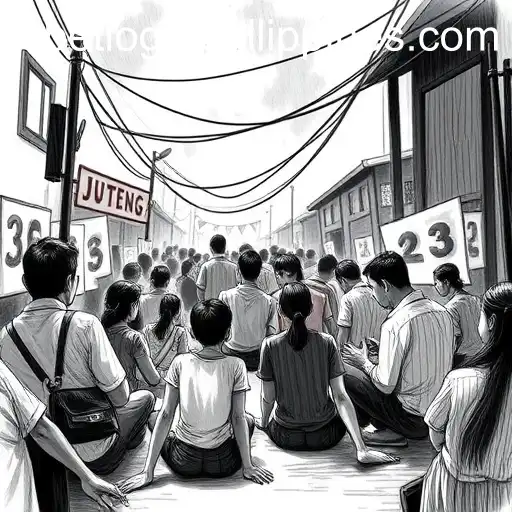
Jueteng is a numbers game widely played in the Philippines, with a history deeply rooted in local culture. This illegal form of gambling involves bettors selecting two numbers ranging from 1 to 37, with winners determined by a random drawing of numbers. Its significant appeal stems from the simplicity of participation and the lure of substantial rewards.
The game is operated primarily at the grassroots level, propagated by a well-organized network of financiers, collectors, and local operators. A typical Jueteng operation involves 'kubradors' or collectors roaming neighborhoods to solicit bets, which are then relayed to a central hub where numbers are drawn.
Jueteng's Socio-Economic Impact
Despite being illegal, Jueteng thrives due to its social and economic implications. For many, it is a means of escapism from poverty, offering a glimmer of hope for financial mobility. The game provides an informal source of employment for thousands involved in its operations, from the local 'coordinators' to the betting station runners.
Moreover, Jueteng's impact extends beyond individual gain. The revenues generated are often purported to circulate back into local communities, funding small-scale charitable acts or under-the-table contributions to local events. This community-centric focus helps solidify Jueteng's presence, leavening its acceptance and endurance.
The Regulatory Battlefield: Frenzied Attempts and Challenges
Efforts to curb Jueteng have been relentless yet met with intricate challenges. Enforcement agencies face significant obstacles, including corrupt practices within ranks and the covert nature of Jueteng operations. Efforts to legalize and regulate the game have been proposed but frequently stifled by political and moral opposition.
The clandestine nature of the operation, often backed by political benefactors, makes dismantling Jueteng as elusive as it is complex. The inherent incentives for officials and local enablers to benefit from Jueteng adds layers of protection around its existence, further complicating regulatory measures.
Lvbet: The Paradigm of Legalized Gambling
In contrast to the shadowy operations of Jueteng stands Lvbet, a legitimate and reputable gaming platform that offers a wide range of gambling services. As a regulated entity, Lvbet adheres to international standards of fairness and transparency, providing a safe and secure environment for its users.
Lvbet’s operations underscore the potential benefits of legal and well-regulated gambling platforms. By adhering to stringent regulatory measures, such platforms can deliver entertainment while ensuring player protection and responsible gaming. This not only helps maintain a healthy gambling ecosystem but also supports broader economic contributions through taxation and employment generation.
Contrasting Jueteng and Lvbet: Regulation Over Illegalization
The stark contrast between Jueteng and Lvbet amplifies the dialogue on addressing unregulated gambling. While Jueteng showcases the difficulties associated with unregulated operations and the socio-political ramifications, Lvbet epitomizes the benefits of transparent and fair gaming.
The integration of technology into platforms like Lvbet also highlights advances in ensuring gambling safety amidst increasing digital threats. Such measures include robust encryption protocols, transparent payout systems, and comprehensive responsible gaming programs designed to protect vulnerable players from exploitation.
Implications and Future Directions
The ongoing dialogue surrounding Jueteng and its regulated counterparts like Lvbet presents multiple pathways for policy interventions and innovations in gambling legislation. Advocates push for the transformation of the betting landscape through legalization avenues akin to Lvbet’s model, which could foster accountability and reduce the risks associated with clandestine betting.
Policymakers continue to grapple with striking a balance between prohibition and regulation. A potential path forward may involve adopting a mixed system that integrates responsible gaming practices learned from international standards, as exemplified by Lvbet, into localized gambling structures.
Thus, while Jueteng remains entrenched in the cultural and socio-economic landscape of the Philippines, the juxtaposition with Lvbet provides valuable lessons in regulatory frameworks and the pursuit of a balanced gambling environment. The challenge remains in morphing this deep-seated pastime into contributions that complement economic development and uphold social good.